$52M Study to Track 1,500 Babies’ Breathing Struggles
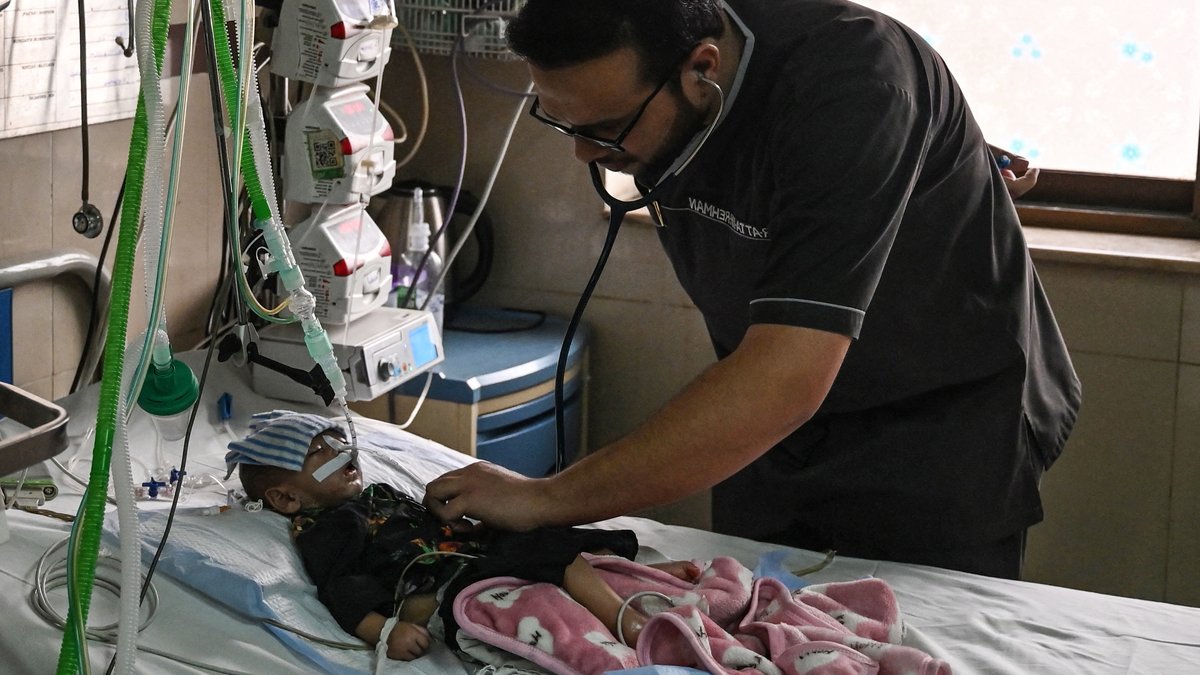
A federally sponsored research project will track 1,500 infants and toddlers admitted for viral respiratory infections like bronchiolitis and pneumonia to investigate why some recover completely while others persistently struggle with breathing issues.
The project, named SPIN VINYL, has the potential to receive up to $52 million from the National Institutes of Health (NIH). However, the National Heart, Lung, and Blood Institute has only approved funding for the first year.
Michigan Medicine will lead the consortium as its clinical coordinating center, as announced by the institution.
Children up to 24 months old will be enrolled at 10 hospitals and followed until at least ages 4 to 5.
Parents’ Familiar Struggle with Childhood Respiratory Infections
For parents, this situation is all too familiar. A baby spends days in the hospital on oxygen, returns home, and then continues to wheeze or cough for months.
Currently, doctors cannot reliably predict which children will recover fully and which may face long-term lung issues.
The study will include children hospitalized with bronchiolitis, pneumonia, or pediatric acute respiratory distress syndrome (PARDS), a severe form of lung injury.
The NIH funding notice requires the inclusion of preterm infants and a control group for comparison.
Principal investigator Peter Mourani, M.D., division director of pediatric critical care medicine at Michigan Medicine, highlighted the core issue.
“We don’t know which children will recover completely, which may have repeated problems with subsequent infections, and which may go on to have persistent respiratory disease,” he stated.
Leading Hospitals Join Forces in SPIN VINYL Study
The enrolling sites include Michigan Medicine’s C.S. Mott Children’s Hospital, Children’s Hospital of Philadelphia, Texas Children’s Hospital in Houston, Nationwide Children’s Hospital in Columbus, Children’s National Medical Center in Washington, D.C., Children’s Hospital Colorado, Arkansas Children’s Hospital, and Johns Hopkins All Children’s Hospital in Florida.
UCSF Benioff Children’s Hospitals in San Francisco and Oakland are also participating.
Read Also: Medtech Lobby Pushes Cybersecurity Standards After Attacks
The NIH design mandates that at least 1,200 children be followed until ages 4 to 5, with checkups scheduled six months after discharge and again at 4 to 5 years.
Researchers plan to assess lung function, imaging, immune responses, the virus responsible for the illness, and the bacteria present in a child’s airways.
They will also monitor environmental exposures such as air pollution and tobacco smoke, along with activity and sleep patterns. Statistical tools, machine learning, and artificial intelligence will be employed to identify patterns.
As an observational study, it can identify factors associated with lasting lung problems but cannot establish causation.
No treatments are being tested, and results are not expected soon. According to the NIH plan, data and biospecimens will eventually be shared with external researchers.
RSV and the Vulnerability of Young Infants
The youngest infants bear the brunt of these infections. A CDC-led study focusing on RSV, a primary cause of bronchiolitis, conducted at seven children’s hospitals from 2016 to 2020, found the highest hospitalization rate among babies 0 to 2 months old, at 23.8 per 1,000. These findings were published in Pediatrics.
The average annual rate for all children under 5 was 4.0 per 1,000, with preterm infants hospitalized at approximately twice the rate of full-term infants.
The SPIN VINYL team aims to identify biological indicators in children at higher risk, including those born preterm and those with congenital heart disease.
Families interested in participating can inquire with the pediatric team at any of the participating hospitals. The next critical milestone is whether the project meets its first-year targets and secures continued funding.
The NIH funding is structured as a phased award spanning up to seven years.
The initial year focuses on planning and startup, with continued funding contingent on meeting milestones and future federal budgets.


