Ambulance Antibiotics Fail to Cut Sepsis Deaths in Ontario Trial
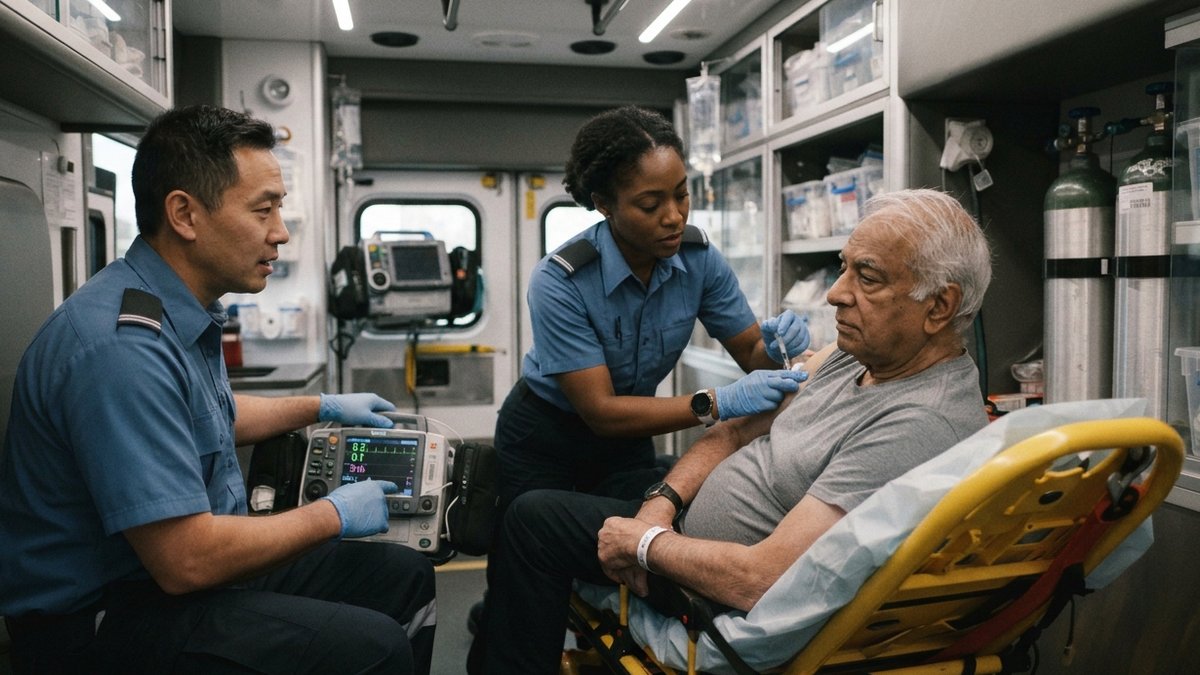
A recent trial in Ontario, Canada, found that giving patients with suspected sepsis an antibiotic shot in the ambulance did not reduce their risk of dying in the hospital. The study, published in JAMA, involved 2,048 adults and showed that hospital mortality rates were nearly identical between those who received the antibiotic ceftriaxone (18.0%) and those given a placebo (18.4%).
The trial, known as the PITSTOP-Antibiotics study, ran from March 2020 to August 2025 across four paramedic services in southern Ontario. Led by Dr. Damon C. Scales of Sunnybrook Health Sciences Centre, it included adults with suspected infections, a temperature of 38°C or higher, and systolic blood pressure below 100. Patients received either a 1-gram injection of ceftriaxone or a saline placebo, with the shot administered about 37 minutes after paramedics arrived.
No Survival Benefit, Increased Side Effects
Despite the antibiotic being given roughly three hours earlier than usual hospital care, there was no significant difference in survival rates. The risk ratio for hospital death was 0.97, a difference attributed to chance. At 90 days, mortality was 27.1% with ceftriaxone and 25.2% with the placebo. None of the 17 secondary outcomes, including intensive care admissions and hospital stay duration, showed a benefit.
However, side effects linked to the antibiotic were more frequent, occurring in 6.2% of patients who received ceftriaxone compared to 1.5% in the placebo group. The study also noted that blood cultures were not drawn before the shot, which could have made it harder to identify the infection-causing germ in the hospital.
Historically, earlier antibiotic administration in sepsis has been linked to better outcomes, but this trial suggests that a three-hour head start may not significantly impact survival when hospital care is prompt. The findings challenge the 2026 Surviving Sepsis Campaign guideline, which conditionally recommends ambulance antibiotics based on low-certainty evidence.
Sepsis remains a critical condition, affecting about 1.7 million U.S. adults annually and causing at least 350,000 deaths during hospitalization or hospice care. Most patients have underlying conditions like chronic lung disease or weakened immune systems. While the trial’s results align with how most U.S. emergency medical services treat sepsis, they highlight the importance of fast hospital care and early recognition of symptoms.
Warning signs of sepsis include a fast heart rate, fever or chills, confusion, shortness of breath, clammy skin, and extreme pain. Families should seek immediate medical care for worsening infections, especially in older relatives, and call 911 for symptoms like confusion or breathing difficulties. Prevention, such as staying up-to-date on vaccines and managing chronic conditions, remains key in reducing sepsis risk.
The Trial’s Design and Limitations
The PITSTOP-Antibiotics trial was a multicenter, placebo-controlled randomized study involving 2,048 adults across four paramedic services in southern Ontario. The median age of participants was 75.
The trial was double-blinded, meaning paramedics, patients, clinicians, and research staff did not know who received the antibiotic. Emergency physicians were informed about the study but could administer antibiotics as usual. The study tested only ceftriaxone, given as a 1-gram intramuscular injection, and results may not apply to other antibiotics or administration methods.
Implications for Sepsis Care and Prevention
The trial’s findings do not diminish the importance of antibiotics in sepsis treatment. Patients in both groups could still receive antibiotics and standard care in the hospital, which remains the cornerstone of sepsis management. The study instead highlights the need for prompt hospital care and early recognition of sepsis symptoms.
Trial Limitations and Sepsis Insights
The trial’s small scale may have missed a modest but meaningful benefit of the antibiotic. It tested only ceftriaxone, given as a muscle injection, within Canada’s public health system. Results might differ with other drugs or settings. Sepsis, the body’s extreme response to infection, often starts in the gut, lungs, skin, or urinary tract. Prompt care, not early antibiotics, appears to drive survival in this study.


