Free stool kits boost San Diego cancer screening
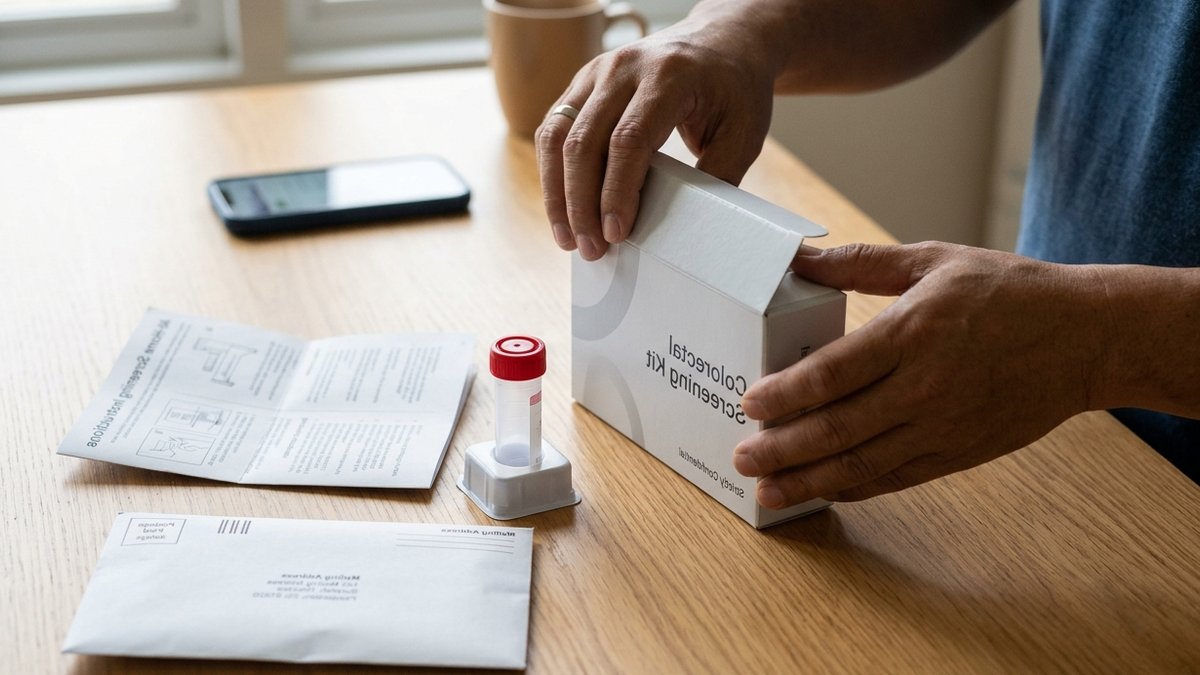
A two-year randomized trial published in JAMA Network Open found that mailing free stool test kits to San Diego County community health center patients boosted colorectal cancer screening rates by about 11 percentage points compared to clinics without the program.
Trial Shows Early Boost in Screening
The pragmatic cluster-randomized trial ran from June 2021 to May 2024 across 16 clinics operated by Neighborhood Healthcare and Vista Community Clinic. Six outreach sites serving 8,334 patients mailed kits, while ten usual-care sites serving 11,916 patients continued standard practice.
Participants were adults aged 50-75, roughly 62% on Medicaid and 40% preferring a language other than English. At baseline, about 39% of both groups were up to date on screening.
Outreach clinics sent an educational flyer, a fecal immunochemical test (FIT) kit with instructions, and a prepaid return envelope. Automated phone and text reminders followed non-responses. Materials were provided in English and Spanish.
After the first year, screening rates were 39.0% in outreach clinics versus 27.8% in usual-care clinics, an 11.2-point difference. Year two showed 37.8% versus 27.0%, a gap of 10.8 points. By year three, rates converged at 39.4% and 36.5%, a difference of only 2.9 points, which was not statistically significant.
Read Also: Measles cases surpass 4400 in US
Why the Third-Year Gap Shrank
Researchers traced the narrowing gap to a protocol change prompted by pandemic-related delays. The year-three mailing list was generated about two months earlier than planned, excluding patients who had returned a kit in year two but were not yet due for a repeat test.
Simultaneously, screening at usual-care clinics rebounded from 27.0% to 36.5% as in-person visits recovered post-COVID. One outreach clinic and one comparison clinic also offered a different at-home stool DNA test in the final year.
Two of the originally recruited health-center systems withdrew before outreach began, further altering the study environment.
The study shows that a FIT kit is only the first step. A positive result requires a follow-up colonoscopy to confirm and treat potential precancerous lesions. The CDC recommends annual FIT screening for adults aged 45-75 at average risk, and most health insurance plans cover screening without a deductible or copay, though readers should check their plan.
Patients who have not received a kit can request one from their clinic or primary-care provider. Federally qualified health centers offer care on a sliding fee scale, and the CDC offers training and tools for mailed FIT programs that clinics can use.
Study Limitations and Interpretation
Commentators from European universities emphasized that effective outreach requires more than distributing kits. They called for systematic registries that track eligibility and trigger timely invitations, suggesting that such infrastructure could sustain improvements beyond short-term spikes.
Read Also: $52M Study to Track 1,500 Babies’ Breathing Struggles
Practical Implications for Safety-Net Clinics
Clinics serving low-income populations can leverage mailed FIT kits to bypass appointment barriers, especially for patients whose preferred language is not English. The provision of prepaid return envelopes further eliminates cost obstacles that often deter screening.
Follow-up remains critical; a positive FIT result must be confirmed with colonoscopy.
National guidelines continue to endorse annual FIT testing for average-risk adults. Federally qualified health centers operate on sliding-fee scales, and the CDC supplies toolkits to help sites implement mailed-FIT programs.
Outcome measurement relied on electronic health-record data aggregated at the clinic level, reflecting a pragmatic approach that mirrors real-world practice. This design avoided individual randomization but captured population-wide screening patterns.
Funding for the research originated from the National Cancer Institute, and the trial was publicly registered before enrollment began. Two investigators disclosed financial relationships with commercial screening-test manufacturers, though these ties were unrelated to the current analysis.

Measles cases surpass 4400 in US


