FDA Approves Portable Ultrasound for Rapid Stroke-Linked Heart Scans
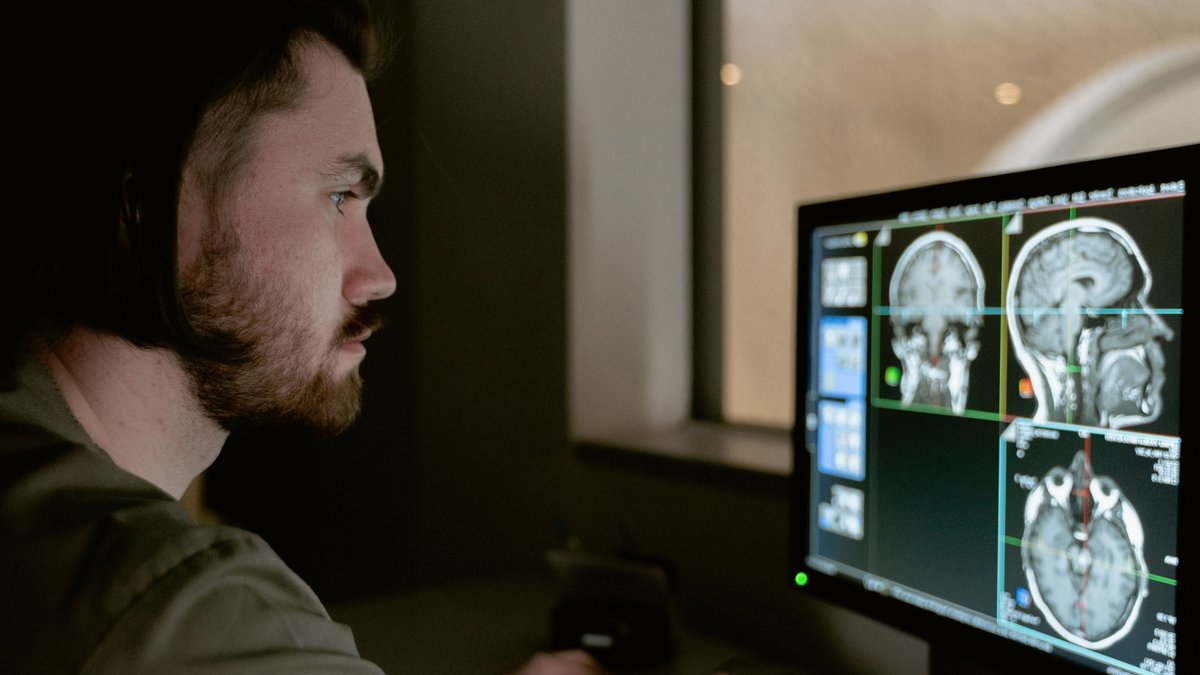
The FDA has cleared Foqus, a portable brain ultrasound system that detects a patent foramen ovale (PFO), a heart opening linked to some strokes. The device scans the brain for signals from tiny bubbles in 40 seconds.
San Diego-based Burl Concepts received 510(k) clearance, with plans to launch in the U.S. by early 2027. The system aims to simplify stroke workups, though its impact on outcomes remains unproven.
How Foqus Works
A PFO is a flap-like opening between the heart’s upper chambers that sometimes fails to close after birth. If it stays open, it can let a clot travel from the heart to the brain, causing a stroke.
Doctors detect this with a bubble study. A saline solution with tiny bubbles is injected into a vein. If bubbles appear in the brain’s circulation, it indicates blood is crossing from the right to the left side of the heart, often through a PFO.
Foqus uses ultrasound to scan the whole brain and automatically reports results with numerical data and a detailed report. The 40-second figure refers to the scan. The full test takes about five minutes, said Dr. Thilo Hoelscher, the company’s chief medical officer.
Advantages Over Current Methods
Standard bubble studies often use a transthoracic echocardiogram, an ultrasound of the heart through the chest wall. A transesophageal echocardiogram offers a closer view but requires a probe down the throat and often sedation, adding time, staff, and cost.
Read Also: Lyme Disease Leaves Lasting Marks on Mouse Immune Cells
Unlike transcranial Doppler, Foqus does not require a skilled operator to locate a specific vessel or find a window in the temporal bone, making it possible for a single nurse to operate the device.
“Foqus gives us a simple, objective test that evaluates the whole brain,” said Dr. Matthew J. Price, director of the cardiac catheterization laboratory at Scripps Clinic in La Jolla.
For stroke survivors and their families, the device could simplify one part of the stroke workup. However, clearance does not prove the test leads to better outcomes. Early data show it identified PFOs in 30 patients, but full trial results are pending.
Additional trials are underway in the U.S. and Europe. Burl Concepts’ Sonas technology, which powers Foqus, previously received a CE Mark in Europe for stroke detection.
CEO Peter van der Sluis said the company’s goal is not simply to make testing faster but to remove practical barriers to it.
A 510(k) clearance indicates that the FDA has found Foqus to be substantially equivalent to an existing device, but it does not require a trial demonstrating improved patient outcomes, with the published data being company-reported early experience rather than a peer-reviewed study.
Read Also: Colorado Hospitals See Sharp Rise in COVID, RSV Cases
Patent foramen ovale, or PFO, is a common condition affecting 25% to 30% of Americans, with most cases not causing problems or requiring treatment, but it can be a concern after a cryptogenic stroke, which is a stroke with no clear cause after testing, with 40% to 50% of such patients having a PFO.
Closing a PFO with a catheter device can lower the risk of another stroke in carefully selected patients. A PFO found during a stroke workup can also be a coincidence, so doctors weigh age, scan findings, and other possible causes before recommending closure.
Faster testing could be beneficial in areas with long wait times, and a test that can be run by a nurse in an office could shorten the process for some patients, although patients may still require a heart ultrasound to directly visualize the opening.
Patients already scheduled for a bubble study or heart ultrasound should keep those appointments. The new device is not yet available in U.S. offices, and existing tests remain the standard way to look for a PFO.
The company plans its first U.S. launch in early 2027, focused on cardiology practices and outpatient diagnostic centers.


